An international programme promoting identity, memory and diversity in the performing arts
Dansa Metropolitana presents an ambitious international programme bringing together creators and companies from around the world with projects that explore identity, memory, community and contemporary forms of bodily expression. In all, seventeen shows make up a rich and diverse programme spanning different choreographic languages and cultural contexts
Among the highlights, A place to dance, by Poliana Lima and Yinka Esi Graves (Brazil/Spain), reflects on shared ground, cultural legacies and the construction of identity. Another project is The common ground, a co-production of Dansa Metropolitana 2024. Taking a sextet format, this piece offers a poetic exploration of the relationship between difference and community, between what separates us and what we share. In a similar line of enquiry, Luna Cenere (Italy) performs Shoes on, a piece that questions social norms and expectations.
Personal relationships and bodily memory underpin Ayoub, by Marina Otero and Ibrahim Ibnou Goush (Argentina/Spain), a project exploring how the body remembers emotional experiences. Also from an intimate perspective, Veza Fernandez (Brazil/Austria) performs Chantal, el texto es un cuerpo anhelando perspectiva, a solo on the construction of identity on stage
The theme of identity also runs through Musseque, by the creator Fabio Januário (Angola/Portugal), which connects urban dance and African roots to explore community and cultural resistance.
The festival will also feature the Danish Dance Theatre, directed by Marina Mascarell, which will present two pieces: Mongrel, a reflection on hybrid identities, and Bloody moon, looking at social rituals and group dynamics.
Relationships between bodies and memory also unfold in Umuko, by Dorothée Munyaneza with the Kadidi Company (Ruanda/France), a piece inspired by an ancestral tree that symbolises continuity and resistance. In parallel, Josefina Gorostiza (Argentina/Spain) presents Fervor, a celebration of the energy of collective movement.
From a more experimental perspective, Pauline Gervais (Quebec) explores in Insecta new forms of perception and movement inspired by the world of insects, while Gaia Pellegrini (Italy/Germany) questions in Veline repertoire the representation of the female body in the media.
Contemporary classical dance also has a prominent place with the Ballet Junior de Genève (Switzerland), presenting three pieces by Marne van Opstal, Fattoumi and Lamoureux and Hofesh Shechter, centred on collective energy and the pleasure of shared movement.
The company Dewey Dell (Italy), made up of Teodora, Agata and Demetrio Castellucci and Vito Matera, offers Le sacre du printemps, an intense reflection on death as transformation and rebirth. For family audiences, the MA compagnie de Marc Lacourt (France) presents Per què un arbre és una gallina?, a piece that plays with absurdity and humour to question how meaning is constructed.
Humour is also present in Un poyo rojo, by the Argentinian company Poyo Rojo, which after fifteen years of international touring continues to captivate audiences with its irreverence.
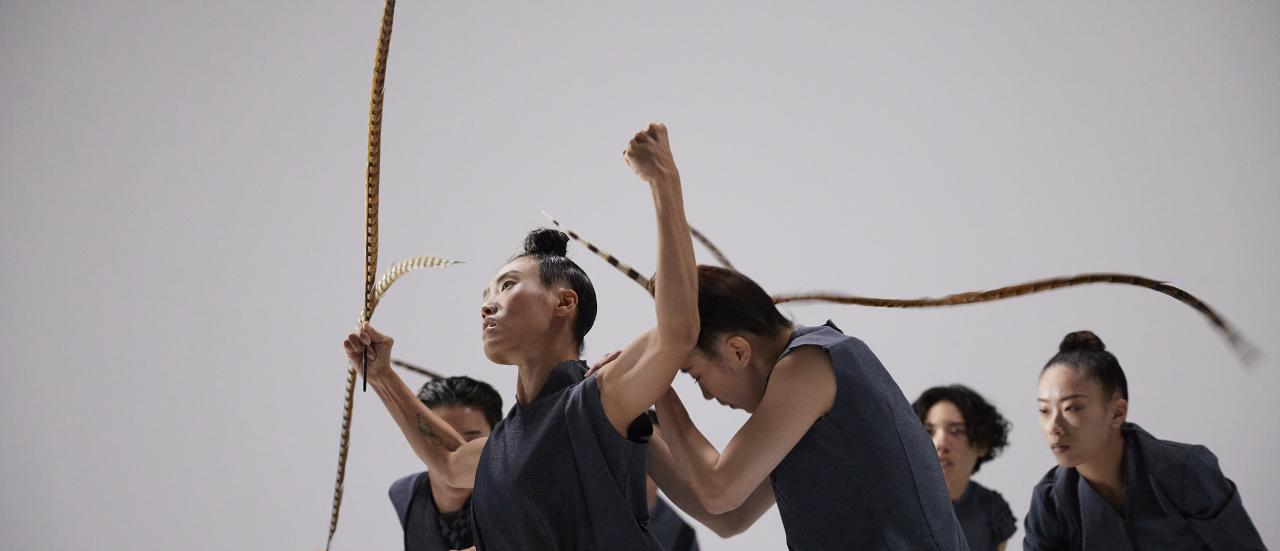
Finally, from Taiwan, the Hung Dance company presents Birdy, a visually delicate and hypnotic work that combines stage poetry and traditional elements to reflect on the social context.
For full information on the international shows, visit the festival website search engine and select “International” from the “Other criteria” drop-down menu.